
What Happens to Your Mortgage If You Can't Work? A Guide to Mortgage Protection Insurance NZ

So, you’ve found the perfect home for you and your family, secured the mortgage and made it past settlement day...
There’s probably a mixture of stress, relief and an overwhelming sense of accomplishment. And you deserve to feel accomplished. Stepping into a new home, whether it’s your first or an upgrade to support a growing family, is a huge achievement.
But with that achievement comes what is likely one of the biggest financial commitments you’ve ever made. And once the dust settles, it’s natural for the questions to start creeping in:
“What happens if I can’t work?”
“How would we keep up with the mortgage?”
“Would my family be able to stay in this home if something happened to me?”
These aren’t always comfortable questions to think about, but they’re important ones.
In this article I’ll go over what Mortgage Protection Insurance is (and what it isn’t), how it works in practice and other key points to help you make an informed decision around what cover is best for you.
What is Mortgage Protection Insurance?
Unlike Life Insurance or Trauma Insurance, which typically pay a lump sum, Mortgage Protection pays you a monthly benefit while you are unable to work.
Mortgage Protection Insurance is designed to help cover the cost of your mortgage if you are unable to work due to sickness or injury. Because Mortgage Protection is designed to cover your mortgage costs, most insurers in New Zealand will allow you to insure for up to 115% of your actual mortgage repayments, or up to 45% of your gross income.
Mortgage Protection benefits are generally paid tax-free, meaning that if you are entitled to a $4,000 monthly benefit, you would generally receive the full $4,000 rather than having tax deducted from the payment.
When setting up your policy, you choose a waiting period, which is the amount of time you need to be off work before your payments begin. Common waiting periods are 4, 8, 13 or 26 weeks.
How Does Mortgage Protection Insurance Work?
Let's say your mortgage repayments are $3,500 a month and you have $4,000 of Mortgage Protection in place with an 8-week waiting period.
If you suffered an illness or injury that meant you were unable to work for six months, your policy could begin paying after the initial eight weeks, providing you with $4,000 per month for the remaining four months, subject to the terms and conditions of your policy.
That money can then be used to help meet your mortgage repayments while you focus on recovering.
The important thing to remember is that the benefit is paid to you, not directly to the bank. You can then use it towards your mortgage and other financial commitments as you need to.
What Mortgage Protection Insurance Doesn’t Cover
Mortgage Protection does not automatically cover you if you lose your job through redundancy. Redundancy cover is a separate type of insurance and is no longer widely available across the New Zealand market (since COVID).
Some insurers still allow redundancy cover to be added to Mortgage Protection or Income Protection policies for an additional cost. However, there are usually strict limits around how much you can receive and how long payments can continue. In many cases, the benefit period is limited to six months.
So if redundancy cover is important to you, it’s worth considering this when choosing your insurer rather than assuming it is included.
Mortgage Protection Insurance is also not a substitute for Life Insurance.
Life Insurance is designed to pay a lump sum to your nominated beneficiaries if you pass away. Mortgage Protection, on the other hand, is designed to pay you a monthly benefit while you are alive but unable to work due to sickness or injury.
Mortgage Protection Insurance is not designed to replace your entire income.
If you feel you would need more than 115% of your mortgage repayments or 45% of your gross income covered, it is worth exploring Income Protection Insurance instead.
Income Protection can provide a higher level of cover and is designed to replace a portion of your income if you are unable to work. We’ll explore the differences between Mortgage Protection and Income Protection in more detail later in this article.
Try our Mortgage Insurance calculator!
ACC Alone is a Weak Safety Net
ACC works alongside Mortgage Protection Insurance. It doesn’t replace it.
The Accident Compensation Corporation (ACC) is designed to cover you when you are unable to work because of an accident. But accidents are a small reason someone may find themselves off work for an extended period.
Some of the leading causes of long-term absence from work include cancer, stroke, heart disease, depression and anxiety. None of these would generally be considered an accident, meaning ACC wouldn’t cover you.
Even when you are off work because of an accident, Mortgage Protection Insurance can still play an important role.
For example, if an accident leaves you unable to work, ACC will generally provide up to 80% of your pre-injury income. Mortgage Protection Insurance can then provide your insured monthly benefit alongside your ACC payments, helping you continue to meet your mortgage repayments while you recover.
This is because Mortgage Protection Insurance is not typically offset by ACC payments. So, if you have $4,000 per month of Mortgage Protection in place, you could still receive that $4,000 monthly benefit while also receiving your ACC entitlement, subject to the terms and conditions of your policy.
The key takeaway? ACC is valuable, but it only covers accidents. Mortgage Protection Insurance is designed to help protect your mortgage when sickness or injury prevents you from working.
Mortgage Protection vs Income Protection
Mortgage Protection and Income Protection work in a similar way. Both provide you with a monthly benefit if you are unable to work because of sickness or injury.
The key difference is what you're protecting.
Mortgage Protection is designed around your mortgage commitments.
Income Protection is designed around your income.
Depending on the insurer and how the policy is structured, Mortgage Protection can generally provide cover of up to 115% of your mortgage repayments or 45% of your gross income.
Income Protection can potentially provide a higher level of cover. Depending on the policy, you may be able to insure up to 62.5% of your gross income as a non-taxable benefit, or up to 75% as a taxable benefit.
Income Protection generally provides a higher level of cover, this means that the premium will generally be higher too.
So, which one is right for you?
There isn't necessarily a right or wrong answer.
The important thing is understanding what would actually happen to your household financially if you couldn't work for six months, a year, or longer.
Some questions worth asking yourself are:
Does your household rely heavily on your income?
Could your partner's income cover your household expenses if your mortgage was taken care of through Mortgage Protection?
Do you have emergency savings that could cover your other expenses while you're unable to work?
How long could your household realistically maintain its current lifestyle on one income?
Would you want to continue paying for things like childcare, groceries, rates and utilities while you're recovering?
Would you need more than your mortgage repayments covered?
These are the questions that should drive the conversation around how much cover you need.
We have calculators available that can help you understand what your potential financial shortfall could look like. If you're unsure whether Mortgage Protection or Income Protection is the better fit, that's exactly where getting advice can help.
There is no cost to you for our advice, so there is no need to make the decision on your own.
Should You Arrange Mortgage Protection Insurance Through Your Bank?
When you've just taken out a mortgage, your bank is probably the first place you think of when it comes to protecting it.
And that's completely understandable.
They've just helped you secure what may be the biggest loan you'll ever have, so adding insurance to the conversation can feel like the obvious next step.
It's worth understanding that when you arrange your insurance through a bank, you're usually dealing with the one insurance provider that bank has partnered with.
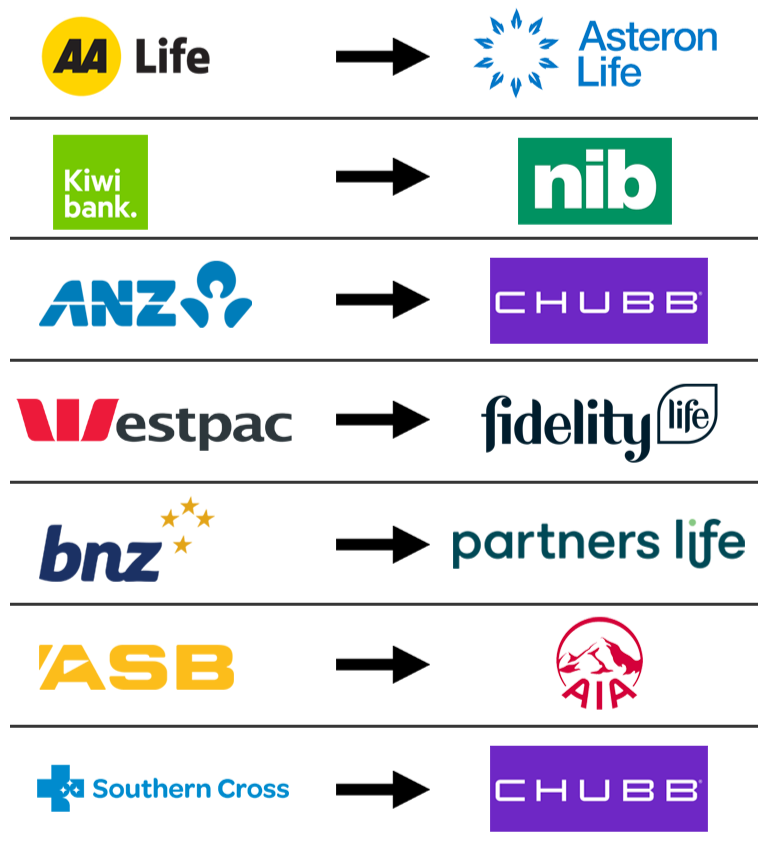
An insurance adviser, on the other hand, can compare options across the wider insurance market and help you determine which provider and policy best fit your circumstances.
This matters because insurance isn't a product you want to choose based solely on convenience. It needs to be competitively prices & have policy wordings that are appropriate for you.
The policy might sit quietly in the background for years before you ever need it. When you do need to claim, you want to know that the cover you've put in place is appropriate and that you have someone in your corner to help you through the process.
That's one of the biggest advantages of using an insurance adviser.
You're not just getting a policy.
You're getting someone who understands the insurance market, can compare different providers, explain the differences between policies and advocate for you when you need to make a claim.
So, by going through an adviser, you're potentially trading a little convenience upfront for:
Independent advice
Industry expertise
Comparison across multiple providers
A policy tailored to your circumstances
Ongoing support when you need to claim
Potentially better value for your particular needs
Plus, when you're going through a difficult period because you're sick or injured, having someone else help navigate the insurance side of things can be incredibly valuable.
Why make a difficult situation harder than it needs to be?
Who Should I Get Mortgage Protection Insurance From?
Mortgage Protection is offered by pretty much all of the key life and disability insurers in New Zealand, including AIA, Partners Life, nib, Asteron, Fidelity Life and Chubb.
There isn't one provider that is automatically the best for everyone.
The right insurer for you will depend on your circumstances, your budget, your occupation, your health, what you're looking to protect and what other insurance you have or may want to put in place.
For example, if redundancy cover is something you specifically want to consider, your provider options become more limited because not all insurers currently offer it.
Or perhaps you value rewards and incentives for maintaining a healthy lifestyle. In that case, AIA offers its Vitality programme to policy holders which may be something worth considering, with benefits that can include premium discounts as well as discounts on things such as fruit and vegetables, gym memberships and movie tickets.
These differences are exactly why I don't think insurance should be approached as a simple "which insurer is cheapest?" exercise.
The cheapest policy isn't necessarily the best policy and the most expensive policy isn't necessarily the best policy either.
It's about finding the right balance between what you're protecting, how much cover you need, the quality of the policy and what you're comfortable paying.
Do I Need Mortgage Protection Insurance?
That's ultimately a personal decision.
It's worth looking at the question slightly differently.
You didn't buy your home because you wanted another monthly expense.
You bought it because it's where you want to live, build your life and create security for yourself and your family. Your mortgage is what makes that possible.
So the question isn't necessarily:
"Can I afford Mortgage Protection Insurance?"
It's:
"What would happen to my mortgage if I couldn't work?"
If you had a serious illness or injury tomorrow and couldn't earn an income for six months, would your savings be enough? Would your partner's income be enough? Would ACC cover what you need?
Most importantly, could you keep the home you've worked so hard to secure?
Insurance can't stop something unexpected from happening.
What it can do is make sure that if it does, the financial consequences don't become another thing you have to worry about while you're trying to recover.
Already have Mortgage Protection in place?
If you already have Mortgage Protection, it’s worth knowing exactly what you bought.
Do you know what your waiting period is? Whether redundancy cover is included? How much you’re actually covered for? And whether that benefit still matches your mortgage repayments after your latest refix?
Most people have never had these things properly explained to them and that’s okay. Insurance is something you hope you never need to use, so it’s easy to put the policy away and forget about it.
Your circumstances change, your mortgage changes and your insurance should be reviewed from time to time to make sure it still does what you think it does.
If you’d like a second set of eyes on your existing cover, let us take a look.
There’s no cost, no obligation, and if your cover is already right for you, we’ll tell you that.
Hungry for more info?
Try our Mortgage Insurance FAQs or book a call with us.
Tailored insurance solutions from the friendly experts…
I am a qualified & independent Insurance Broker that works with my clients to get the covers they need whilst being mindful of their budgets & goals.
I specialise in Life, Health and Mortgage Insurance for Kiwi’s, along with giving independent KiwiSaver advice.
I can help people who:
Want to get insurance in place but don’t know where to start.
Want their current insurance reviewed.
Megan Long
Independent Insurance Broker
Lvl 5 Financial Cert. Insurance & Investments