
Best Life Insurance Companies in NZ (2026)
Last updated: June 2026. This guide is general information only and is not personalised financial advice. Premiums, policy wordings and benefits change regularly — always confirm the current details with the insurer or a licensed adviser before you make a decision.

Why bother with life insurance at all?
Life insurance can pay a tax-free lump sum to the people in your life who are either financially reliant on you, or would be left with your debt if you were to pass away. Usually a payout can also occur if you are diagnosed as terminally ill. In New Zealand the most common reasons people get life insurance are to clear a mortgage and other debt so the family can keep the home, to replace the income a household would lose, to cover children’s costs and education, to fund a business buy/sell agreement between owners, and simply for peace of mind. It is not a one-size-fits-all product, and the amount of cover matters just as much as who you place your cover with.
The six main life insurers at a glance:
“Elan Brokers helped set up my life & trauma insurance. They gave me great advice and were easy to talk to.” - Tomer Shabo

1. Partners Life
Founded in New Zealand in 2011, Partners Life grew quickly into one of the country’s biggest life and health insurers. In 2022 it was acquired by Japanese giant Dai-ichi Life Holdings for around $1 billion, which gives the local business serious financial backing while it continues to operate under the Partners Life brand. Day-to-day operations have stayed the same since the acquisition with many long-term Kiwi employees staying with the company. In the last financial year (ending March 2025) Partners Life paid out more than $325 million in claims and reported paying about 95% of all assessed claims.
Pros
One of the most comprehensive policy wordings in the market, with strong terminal illness and serious-illness benefits built in.
A multi-benefit discount when life cover is paired with other insurance types e.g. Trauma & Income Protection.
Special Events Increase benefit lets you lift your cover at life milestones (new baby, mortgage, marriage) without fresh medical underwriting.
Fast digital underwriting and a wide menu of other covers (trauma, income protection, TPD) that can be bundled.
Backed by a very large global parent and a strong claims-paid record.
Partners Life offers a "Life Advantage" discount, which gives you a permanent 10% premium cut on eligible Life and Trauma covers.
Cons
Premiums are often at the mid to higher end; you tend to pay for the breadth of cover.
A few options that can be overwhelming without an adviser to guide you.
Who it suits: people who want top-tier, comprehensive cover and are willing to pay a bit more for it, especially if they want to bundle several types of insurance.

2. AIA
AIA is New Zealand’s largest life insurer and part of the AIA Group, one of the biggest insurers in the Asia-Pacific region (founded in 1919). It became the market leader in NZ after acquiring Sovereign in 2018 and integrating the two product ranges. AIA paid around $829.6 million in claims across 2024 and protects close to 800,000 New Zealanders.
Pros
Enormous financial scale and a high AA- financial strength rating which is among the strongest in the market.
Strong, comprehensive policy wording with terminal illness and serious-illness benefits.
Multi-benefit discounts when you add trauma, income or mortgage protection.
The AIA Vitality wellness programme can reward healthy habits with premium discounts and perks.
Fast digital underwriting and a large adviser network.
Cons
Getting the most value often means engaging with Vitality, which not everyone wants to do.
Its reported claims acceptance rate (around 92% for 2023–24) sat slightly below some smaller competitors.
As a very large insurer, some customers find the experience less personal unless they go through an adviser. Their online systems/portals are clunky
Who it suits: people who value maximum financial strength and scale, and those who would like to utilise the benefits offered through AIA vitality (great for wellness conscious folk).

3. Asteron Life
Asteron Life has one of the longest histories in the market, with roots going back to 1878. It has changed hands at the corporate level. Moving from Suncorp ownership towards the Resolution Life / Nippon Life group, but continues to operate as an adviser-focused life insurer in New Zealand. It has consistently published one of the highest claims acceptance rates in the market (around 97% for 2023–24).
Pros
Consistently high claims acceptance rate.
A range of optional benefits and conversion features that let you add trauma or TPD cover later without full re-underwriting.
Funeral advancement benefit pays a portion of the cover quickly to help with immediate costs.
Strong A+ financial strength rating and a long, stable track record.
Cons
Corporate ownership changes have created some uncertainty about long-term direction, even though the policies themselves are unaffected.
Brand awareness among consumers is lower than AIA or Partners Life.
Higher claims acceptance can mean harsher underwriting at the application stage.
Often cited as policy options which are unnecessarily complicated.
Who it suits: people who want a strong, claims-friendly policy with flexible optional benefits, and who are comfortable going through an adviser.
4. Fidelity Life
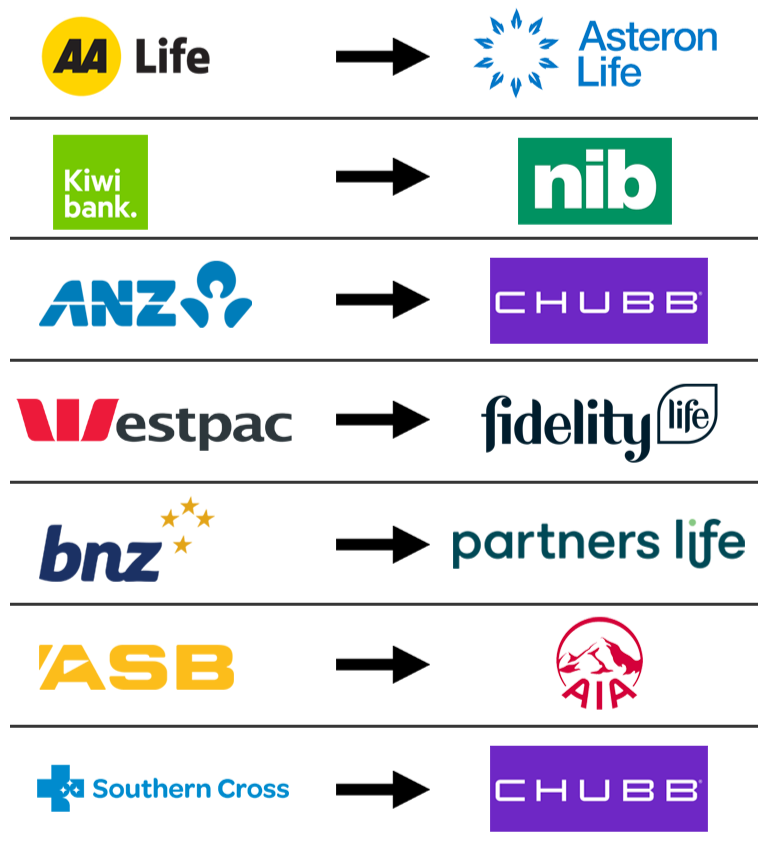
Fidelity Life is the largest New Zealand-owned life insurer, operating since 1973. It expanded its share of the market by taking on the former Westpac Life book. The company says it has now paid out more than $2 billion in claims since it was founded, and in its 2025 financial year supported more than 2,000 customers through claims.
Pros
Locally owned and run, which appeals to people who prefer to support a New Zealand company.
Solid core policy with terminal illness and serious-illness benefits and the usual special-events increase option.
Long track record and a diverse product range across life, trauma and income protection.
Cons
Its policy wording, while strong, is not always considered as feature-rich as Partners Life or AIA at the top end.
Has been through a significant technology and systems overhaul, which at times affected service turnaround.
Its A- rating, while solid, is a notch below AIA’s scale.
Who it suits: people who want a strong, policy from a locally owned insurer.
5. Chubb Life
Chubb is a global insurer (with a history dating to 1882 and operations in dozens of countries) that entered the NZ life market by acquiring Cigna’s New Zealand life insurance business in 2022. The local business rebranded from Cigna to Chubb Life in 2023. It carries an A (Excellent) financial strength rating and has been actively innovating since the acquisition.
Pros
Often among the most competitively priced for life cover, sometimes with introductory offers such as 1 or 2 months free cover (usually offered for a limited time).
If you’re relatively healthy, you may qualify for a 15% discount on your premiums for the entire life of your policy.
Backed by a very large global parent.
Solid core benefits including terminal illness and serious-illness cover and special-events increases.
Fast digital underwriting.
Chubb client benefits offered to almost all Chubb customers, this can sometimes partially fund the creation of a family will.
Cons
The brand is still relatively new to NZ consumers following the Cigna transition.
Some legacy products and processes were still being integrated after the rebrand.
Note on Southern Cross life cover: it is underwritten by Chubb but often costs more than going to Chubb directly. This is worth comparing if you already hold Southern Cross health cover.
Who it suits: price-conscious buyers who want strong global backing and a very competitive premium.

6. nib
nib is best known as a health insurer, operating across Australia and New Zealand since 1952. It offers a basic life insurance benefit that can be added to its health policies rather than a full-featured standalone life product. It holds an A (Strong) rating.
Pros
Convenient if you already hold (or want) nib health insurance and want to add some life cover in one place.
Includes a terminal illness benefit and complimentary funeral expenses cover.
Cons
Cover is capped (historically around a $1 million limit), so it is not suitable for large mortgages or high income replacement.
Fewer optional benefits and add-ons than the dedicated life insurers.
Designed as an add-on rather than a standalone, comprehensive life policy.
NIB customer service has historically been very slow, especially in the last few years.
Who it suits: existing nib health members who want a modest amount of life cover bolted on. For larger sums, a dedicated life insurer is usually the better choice.
Do NZ banks offer life insurance?
Yes, kinda. Most banks and many other brands that sell “their own” life insurance don’t actually underwrite it themselves. They resell policies from the main insurers above. If you sign up through a bank, your cover is usually placed with the insurer that sits behind that brand. The trade-off is that bank-sold cover often comes with less explanation of your options and no adviser in your corner at claim time. As noted above, Southern Cross life cover is underwritten by Chubb but can cost more than buying from Chubb directly.
Which life insurer is best for pre-existing conditions?
There is no universal answer, because each insurer’s underwriting team treats specific conditions slightly differently. The good news is that life insurance is generally more resilient to pre-existing conditions than trauma, income or health insurance. It usually takes multiple serious conditions before an insurer declines life cover or applies a large premium loading.
Because the differences between underwriters are real but hard to see from the outside, this is one area where an experienced adviser who knows how each insurer handles particular conditions can genuinely improve your outcome. It is also a strong argument for getting at least some cover in place while you are young and healthy.
Rate-for-age (stepped) vs level premiums for life insurance
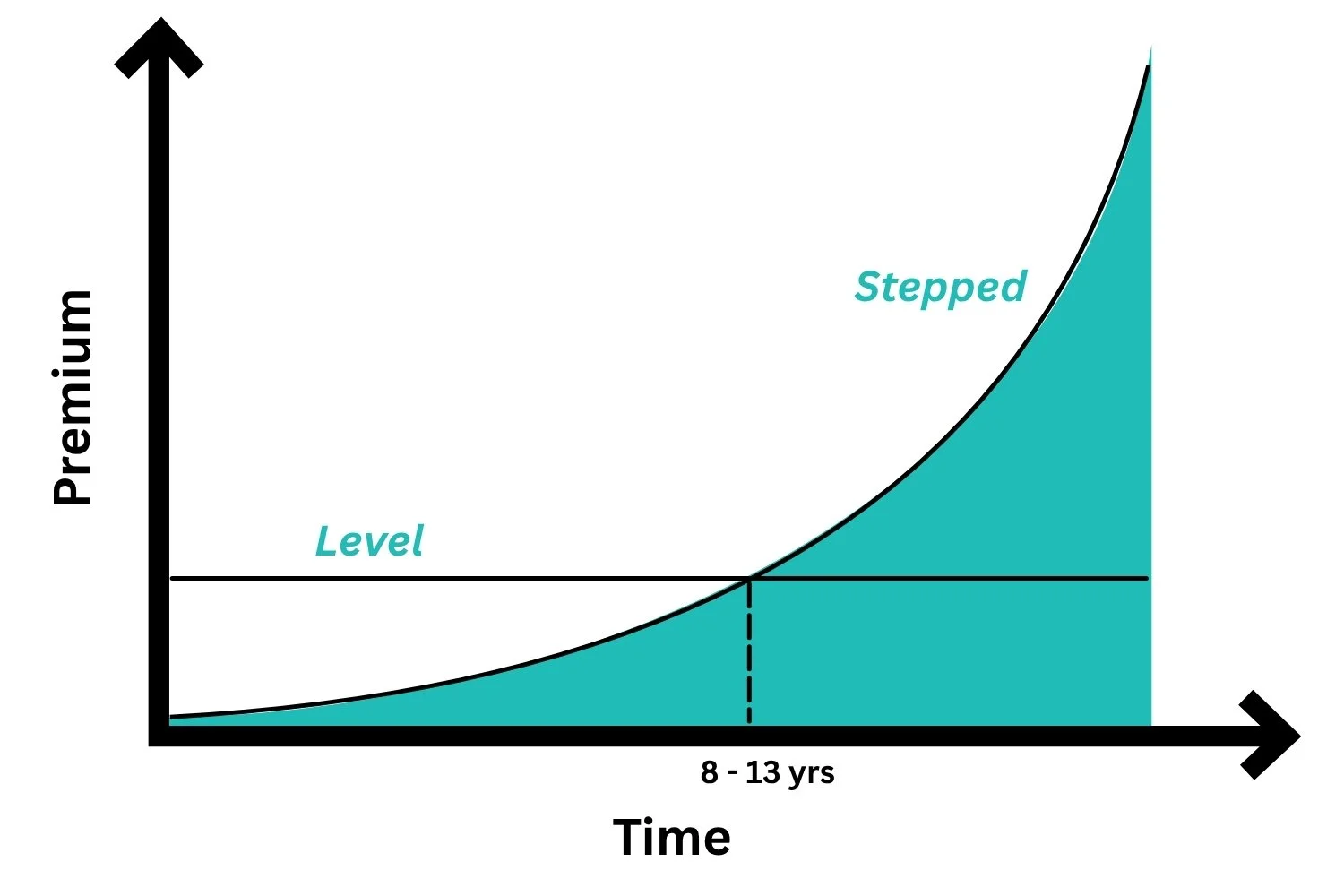
Whichever insurer you choose, you will usually pick between two premium structures. Rate-for-age (stepped) premiums start cheaper but rise as you get older. Level premiums cost more at the outset but stay flat, which can work out cheaper over the long run if you hold the cover for many years. The right choice depends on how long you expect to keep the policy.
Generally a level policy will be more expensive than the equivalent rate-for-age policy for the first 8-13 years, afterwards you will begin to save with the level policy.
Should you use a broker or adviser?
Using a licensed financial adviser to arrange life insurance is generally free to you and doesn’t increase your premium as the insurer pays the adviser. A good independent adviser can place your cover with whichever insurer best fits your situation (especially useful if you have pre-existing conditions), explain the differences in policy wordings so you don’t have to read them yourself, and ( importantly) help you through any future claim.
How to choose a life insurer - checklist
Work out how much cover you actually need (debts + income replacement + future costs) before comparing brands. Try our life insurance calculator.
Get quotes from more than one insurer, pricing for the same person can vary a lot between companies, especially if you have existing medical issues. Request quotes.
Compare the policy wording, not just the premium, especially terminal illness and serious-illness benefits.
Decide between rate-for-age and level premiums based on how long you’ll hold the cover.
If you have any health history, get advice on which insurer is likely to underwrite you most favourably. When in doubt, get your insurance adviser to apply with two different insurers to know for certain what exclusions or loadings, if any, might be placed on your policy.
Tailored insurance solutions from the friendly experts…
I am a qualified & independent Insurance Broker that works with my clients to get the covers they need whilst being mindful of their budgets & goals.
I specialise in Life, Health and Mortgage Insurance for Kiwi’s, along with giving independent KiwiSaver advice.
I can help people who:
Want to get insurance in place but don’t know where to start.
Want their current insurance reviewed.
Megan Long
Independent Insurance Broker
Lvl 5 Financial Cert. Insurance & Investments